







Once upon a time, Carl Pei was the man behind OnePlus – the upstart that disrupted the smartphone world with clean design, slick software, and serious value for money. Fast forward a few years, and he’s now steering Nothing, a company obsessed with standing out in a sea of sameness.
But in a twist of fate only tech history could write, Nothing’s boldest phone yet, the Nothing Phone (3), finds itself going head-to-head with the OnePlus 13s, a phone that represents everything Pei once stood for – performance, polish, and price-conscious power. So, what happens when the founder of your past becomes the fiercest competitor to your present? Let’s break it down in our Nothing Phone (3) vs OnePlus 13s comparison.
Nothing Phone (3) vs OnePlus 13s: Build and design
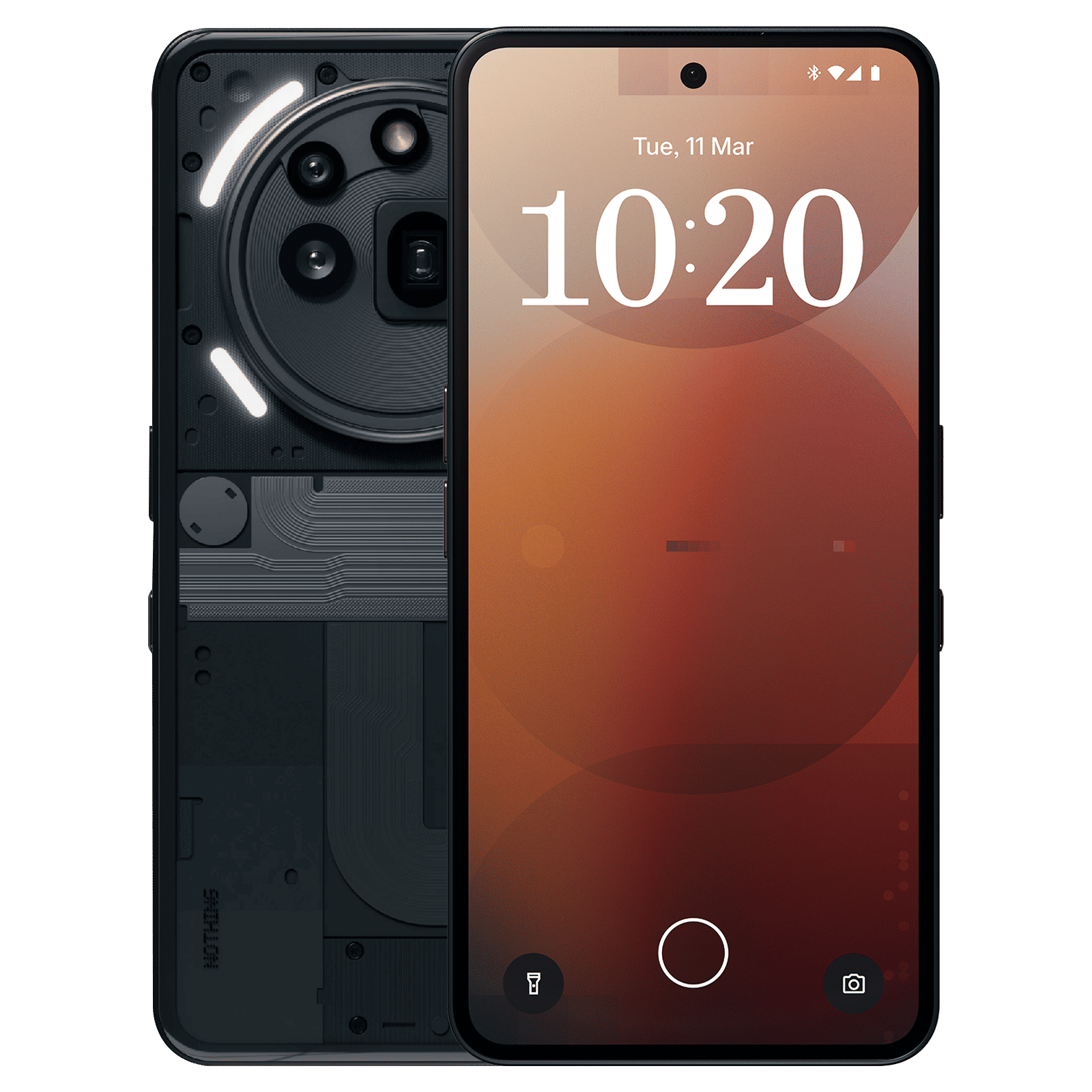
Like it or not, the Nothing Phone (3)’s design is a conversation starter. Its transparent back, off-centre camera module, and the new Glyph Matrix rear interface bring a retro-futuristic flair that’s part nostalgia, part innovation. Whether you find the dot-matrix display useful or just playful fluff, it’s undeniably distinctive. Bonus points for the IP68 rating.
In contrast, the OnePlus 13s is built for understatement. Its clean lines, simplistic yet classy design, and sturdy aluminium frame don’t beg for attention; they earn it with polish. It’s the kind of phone that doesn’t feel the need to scream its presence. You’ve got an IP65 rating too, although it doesn’t compare to the Nothing Phone (3)’s robust IP68 rating. All in all, if you want your phone to stand out, go for Nothing. If you want timeless elegance, it’s OnePlus.
Nothing Phone (3) vs OnePlus 13s: Display
The Nothing Phone (3) sports a 6.67-inch flexible LTPS AMOLED panel with 1.5K resolution, 120Hz adaptive refresh rate, and an eye-popping 4,500 nits peak brightness (HDR). Its bezels are razor-thin at just 1.87mm, giving it a stunning 92.89 per cent screen-to-body ratio, one of the highest in its class.
The OnePlus 13s, on the other hand, houses a far more diminutive 6.32-inch LTPO AMOLED display, with 120Hz refresh rate. OnePlus phones are known for their colour tuning, and in our testing, the panel performed admirably.
ALSO READ: OnePlus 13s review
The OnePlus 13s also uses an LTPO panel, which is superior to the LTPS panel on the Phone (3). OnePlus’ LTPO panel can go all the way down to 1Hz, while the Phone (3) can only manage 30Hz, meaning the OnePlus 13s will outperform in terms of display efficiency.
Nothing Phone (3) vs OnePlus 13s: Performance and software
Under the hood, the Nothing Phone (3) runs on the Snapdragon 8s Gen 4 chipset. It is not Qualcomm’s top-tier Elite chipset, but still a serious leap from last-gen. It ships with Nothing OS 3.5 based on Android 15, with five years of Android updates and seven years of security patches. That’s a long-term commitment most phones shy away from. Additionally, Nothing OS is one of the cleanest Android skins on the market currently, making it feel truly premium.
The OnePlus 13s is a step ahead in raw power, though. It comes with the latest Snapdragon 8 Elite at a much lower price point compared to the Phone (3). OnePlus’s OxygenOS is responsive and now infused with smart AI touches like real-time transcription and image enhancement. The phone comes with OxygenOS 15 based on Android 15 and offers up to five major Android updates, much like the Phone (3). So, in terms of performance, OnePlus wins on brute strength, but Nothing’s software is exceptional.

Nothing Phone (3) vs OnePlus 13s: Cameras
The Nothing Phone (3) marks a serious jump in optics. You get a triple-camera setup including a 50MP primary sensor with OIS, a 50MP ultra-wide, and a 50MP periscope telephoto with 3x optical zoom. It supports 4K 60fps video across all lenses, and a 50MP selfie camera with autofocus. It’s Nothing’s most serious photography effort yet.
The OnePlus 13s, while less showy on paper, sports a refined 50MP primary sensor with OIS, a 50MP telephoto with 2x optical zoom, and an 8MP ultrawide. It also houses a 32MP selfie camera. While this is a pretty decent camera setup, it could pale in comparison to Nothing’s more robust camera array.
Nothing Phone (3) vs OnePlus 13s: Battery and charging
The Nothing Phone (3) packs a 5,500mAh silicon-carbon battery. which is denser and longer-lasting than typical lithium-ion. It supports 65W wired and 15W wireless charging.
The OnePlus 13s carries a gargantuan 5,850mAh silicon-carbon battery with blazing-fast 80W SuperVOOC charging. No wireless support here, though. Despite having a smaller body, the OnePlus 13s houses a larger battery, and its endurance is simply fantastic. However, the lack of wireless charging could disappoint some.
Nothing Phone (3) vs OnePlus 13s: Prices
Despite a weaker chipset and smaller battery, the Nothing Phone (3) costs more, highlighting just how much value the OnePlus 13s brings. However, Nothing’s software is one of the best in the business, and it has a superior camera setup.
ALSO READ: Nothing Phone (3) price in India: Here’s how much it will set you back by
The Nothing Phone (3) is priced at Rs 79,999 for the 12GB + 256GB model, and it costs Rs 89,999 for the top-end 16GB + 512GB variant. With bank and exchange offers, the price drops to Rs 62,999 and Rs 72,999, respectively.
The OnePlus 13s, on the other hand, starts at Rs 54,999 for the 12GB + 256GB model, with the top 12GB + 512GB variant costing Rs 59,999. It screams value at this competitive pricing.
Nothing Phone (3) vs OnePlus 13s: Which one should you pick?
At the end of the day, the OnePlus 13s is the clear value pick, delivering top-tier performance, a premium LTPO display, excellent battery life, and clean software at a significantly lower price. It may not have the most exciting design or the flashiest camera setup, but it nails the fundamentals better than most flagships twice its price.
The Nothing Phone (3), meanwhile, is for those who want something more expressive; a phone that doubles as a statement piece. Its superior camera hardware, seamless software, and unique design philosophy make it stand out in a market of lookalikes. But you’ll be paying a premium for that difference. The choice ultimately comes down to whether you want maximum utility or maximum personality. Both phones deliver, but in very different ways.

Unleash your inner geek with Croma Unboxed
Subscribe now to stay ahead with the latest articles and updates
You are almost there
Enter your details to subscribe

Happiness unboxed!
Thank you for subscribing to our blog.
Disclaimer: This post as well as the layout and design on this website are protected under Indian intellectual property laws, including the Copyright Act, 1957 and the Trade Marks Act, 1999 and is the property of Infiniti Retail Limited (Croma). Using, copying (in full or in part), adapting or altering this post or any other material from Croma’s website is expressly prohibited without prior written permission from Croma. For permission to use the content on the Croma’s website, please connect on contactunboxed@croma.com
- Related articles
- Popular articles
Dhriti Datta
Comments