







convenience to the process of washing clothes. Even if you don’t have one at home, chances are you might have noticed or worked with a commercial or industrial laundromat, which uses large washing machines to efficiently wash clothes every day. While good-old hand-washing is always a solution, there’s no denying the convenience and clean feeling of clothes which have been washed and cleaned by a modern washing machine.
You might be taking this appliance for granted today, but the modern washing machine has a fair amount of history behind it. From the earliest methods of washing clothes came the idea of the automated washing machine, but modern technology has taken it much further and created an efficient appliance that can wash a big load of clothes in short time.
History of the washing machine
Let’s start from the beginning – who invented the washing machine? This isn’t an easy question to answer, because the concept of the modern washing machine is itself based on many different inventions and ideas that eventually came together to become the modern appliance we use today. Various inventors are credited with developing different ideas and introducing working models that were able to do the work that a washing machine does today.
The basic idea comes from the late 1700s, where washing machines were operated by hand. Jacob Shaffer created a design for a hand-cranked manual washing machine, which eventually led to the concept of an enclosed drum in which the clothes were placed into a mixture of water and soap.
The machine turned to offer essentially the same kind of wash that modern washing machines offer – by the process of agitation. This involves pressing and rotating against a textured side in a container, to forcibly remove dirt and impurities from clothes. Later, James King is said to have invented the first mechanical washing machine, which used the same concepts but utilised a mechanically operated system to turn the drum.
Alva J. Fisher is credited with inventing the first automatic washing machine – the Thor – which operated electrically to wash clothes. Over the years, this technology was refined, and by the late 1930s the first automatic washing machines arrived in the US, although the high cost made it accessible to only a few.
Washing machines today
Modern electrical washing machines are much more advanced than the early models, and are typically available in two forms – top-loading and front-loading.
ALSO READ: A complete guide to washing machine modes and cycles
As the name suggests, top-loader washing machines have the drum mounted vertically so you load the machine from the top, while front-loader machines have the drum mounted horizontally to load clothes from the front.
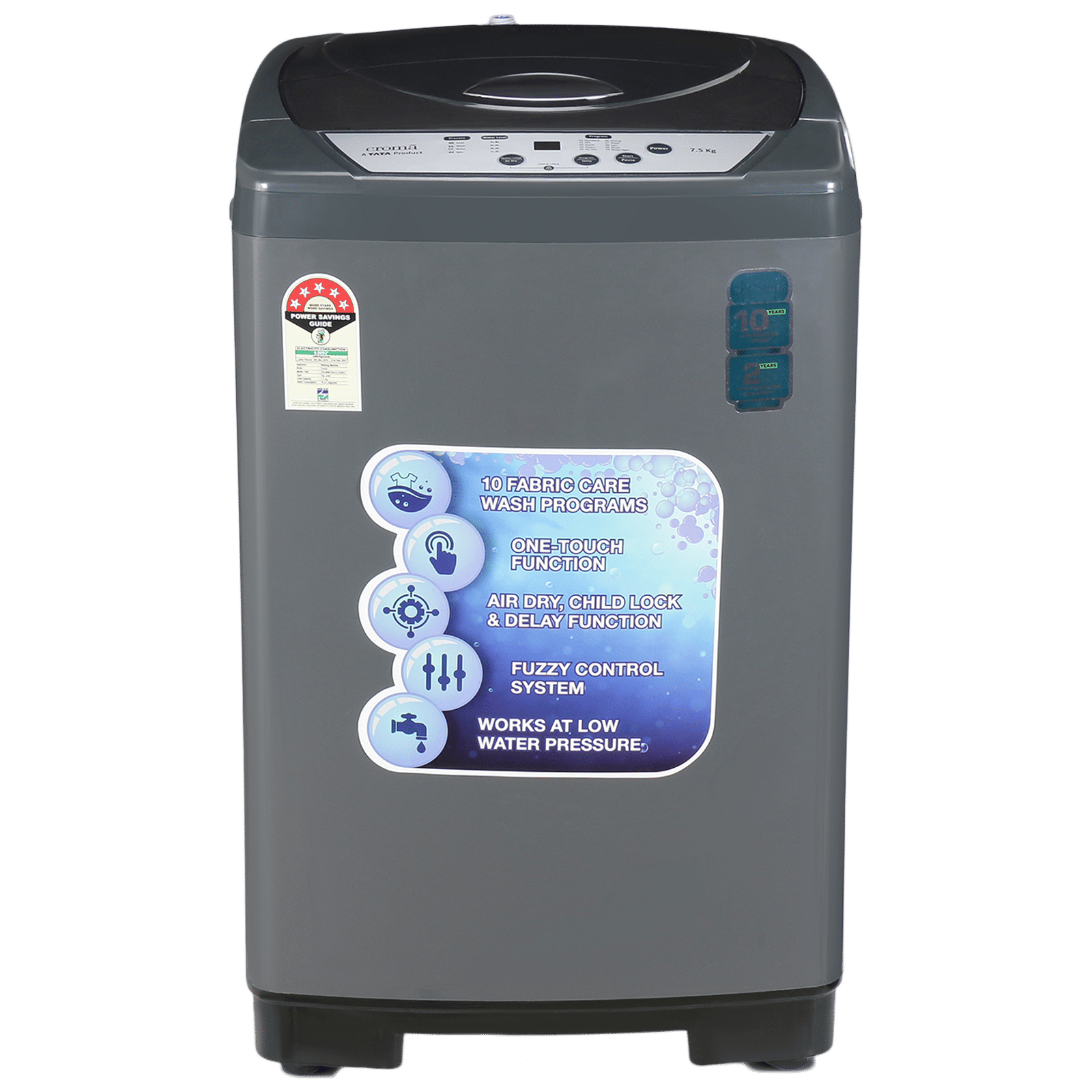

The designs typically have their pros and cons – top-loaders are more affordable and usually have higher capacity to load more clothes in a single wash. Front-loader machines are more compact and have smaller drums to load fewer clothes, but are able to spin faster for a more thorough wash cycle. Front-loading washing machines typically cost more as well.
This is a brief history of the washing machine. Are you planning to buy a new washing machine soon? Do let us know in the comments below.

Unleash your inner geek with Croma Unboxed
Subscribe now to stay ahead with the latest articles and updates
You are almost there
Enter your details to subscribe

Happiness unboxed!
Thank you for subscribing to our blog.
Disclaimer: This post as well as the layout and design on this website are protected under Indian intellectual property laws, including the Copyright Act, 1957 and the Trade Marks Act, 1999 and is the property of Infiniti Retail Limited (Croma). Using, copying (in full or in part), adapting or altering this post or any other material from Croma’s website is expressly prohibited without prior written permission from Croma. For permission to use the content on the Croma’s website, please connect on contactunboxed@croma.com
- Related articles
- Popular articles
Ali Pardiwala
Comments