







In a sea of slabs and protruding cameras, a rather stealthy revolution is unfolding. The pendulum that once swung toward battery-hogging, feature-packed smartphones is now turning back towards designs – more specifically, slim designs.
Just as minimalist architects strip away ornamentation to reveal spaces of clarity and purpose, engineers are rethinking what it means to do more by doing less. The aim is to find how reduction can unlock creativity without sacrificing capability.
Whisper, don’t shout
Slimness appeals to a deep-seated human yearning for elegance. When a device slips effortlessly into your pocket and into your daily rhythm, it transforms from a mere tool into a personal statement.
A slim phone stands out not just for its features, but for its deliberate restraint. When Sanjay Datta, a smartphone aficionado with a collection of over 30 devices, first held his new Samsung Galaxy S25 Edge, he felt that intentional engineering.
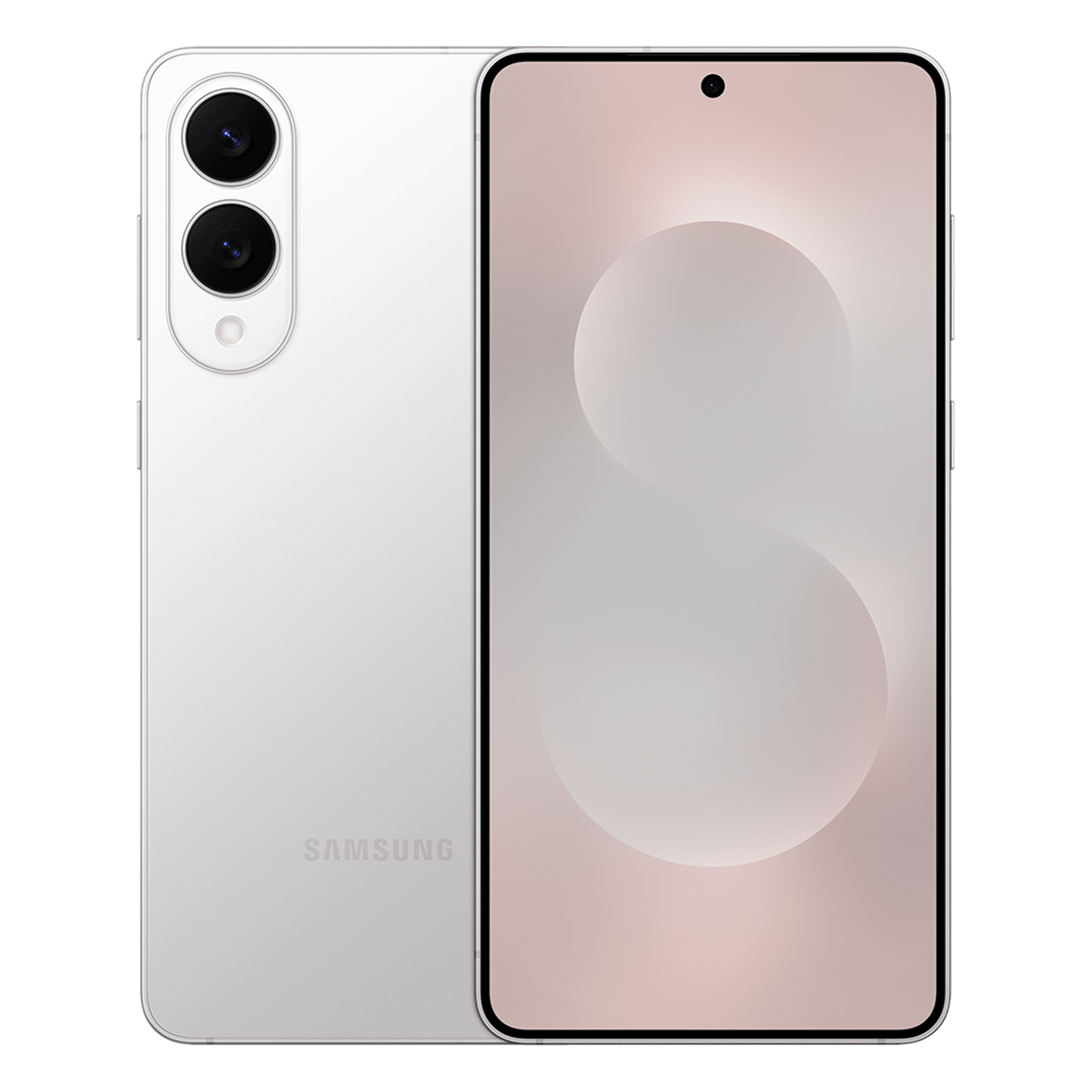
“The S25 Edge doesn’t just look sleek; it feels like it was engineered with restraint, which I respect. It’s razor-thin without feeling fragile, and such balance is rare,” he says.
Why do portability and slim phones matter?
Consumers spend hours each day holding, swiping, and scrolling on their phones – during long video calls, crowded commutes, or fleeting moments between meetings. As screens become extensions of our lives, portability and comfort have never mattered more.
A slim phone eases wrist fatigue, simplifies one-handed use, and slides into tighter pockets and trendy handbags. Pratik Amin, Category and Business Manager at Croma, describes this evolution as a circle of life – “Five years ago, slimness was prized, and then phones grew thicker for battery life. Now we’re rediscovering that sleek profile offers comfort, pocketability, and premium feel all at once.”
The psychology of thin
There is also a psychological premium associated with slim design. A device that whispers rather than shout luxury. At MWC 2025, when the Tecno Spark Slim was revealed, CEO Arijeet Talapatra highlighted what made it possible to fit a 5,000mAh cell fit into a 5.3mm body.

“If you see a 5,000mAh battery with 5.3 mm thickness, it’s crazy,” he noted. “Innovative technologies like silicon carbon batteries allow us to overcome traditional limitations, giving birth to form factors we once thought impossible.”
Slim stars of today are the flagships that got sleeker
Over the past year, flagship devices have signalled a shift in thinking. Honor’s Magic V2 is hailed as one of the slimmest foldables yet, while Xiaomi’s Civi series doubles down on minimalist aesthetics. Motorola’s Edge line highlights its sleek dimensions and even Apple’s next offerings are rumoured to trim thickness significantly. Enthusiasts and casual users alike now seem to be weighing design alongside performance when making purchase decisions.
As Datta observes, “This phone doesn’t shout, it whispers. It’s modern, minimal, and quietly luxurious. That’s what people like me want now – devices that fit into our lives, and not ones we have to adjust around.”
Market research further suggests that demand for slim devices is fueled not only by fashion but by measurable shifts in usage patterns. These signals affirm that the return of slim flagships is far from just a passing whim.
Engineering on a diet
Crafting a slim phone is no simple feat. Beneath every millimetre shaved lies a cascade of engineering challenges, each requiring inventive solutions to ensure that performance and durability are not sacrificed. Traditional lithium-ion batteries, for example, no longer fit into the narrow confines of a modern slim frame.
To address this, manufacturers have begun incorporating silicon-based anodes that boost energy density, as well as stacked architectures inspired by electric-vehicle battery designs.
By moulding custom-shaped cells to the exact contours of a phone’s interior, engineers can squeeze substantial power into otherwise wasted space, while AI-driven power-management systems stretch these smaller batteries through a full day of typical usage.
Yet fitting in a powerful battery is only half the battle. Heat dissipation becomes a critical concern when there’s less than usual space inside a phone’s body. In place of bulky vapour chambers or heat pipes, brands are now experimenting with graphene-based dissipation films and ultra-thin vapour chambers that transfer thermal energy rapidly without adding appreciable thickness.
Software-driven throttling algorithms further help balance performance, allowing the device to handle demanding 5G and AI tasks without overheating or slowing down to a crawl.
As Prabhu Ram, Vice President of Industry Research at CyberMedia Research, observes, maintaining high performance under these constraints demands a level of integration and thermal design sophistication previously unseen in smartphones.

And then there are the cameras. Where once a protruding bump signified photographic prowess, today’s slim flagships rely on periscope-style lenses that fold optics deep inside the body.
Advances in computational photography further compensate for the smaller sensors, extracting maximum detail even in low light conditions. Manufacturers are thus achieving impressive imaging without a bulky camera hump, marrying the demands of aesthetics with the reality of hardware limitations.
Built to bend, not break
Finally, a slim profile can’t come at the cost of fragility. A lean frame might seem fragile, but modern materials dispel that myth. We are now seeing phones being made using materials that sound something out of a sci-fi movie.
Aerospace-grade aluminium, carbon fibre composites, and Ceramic Shield glass combine to create housings that feel sturdy yet weigh little. Reinforced internal frames and precision machining deliver drop resistance and rigidity on par with thicker devices. The outcome is a phone that is both light and resilient. This is a rather unique testament to how reducing size can coexist with structural strength.
The symbolism of slimness
Beyond engineering, slim phones carry potent cultural and technological symbolism. They are to smartphones what early MacBooks were to laptops – a design statement that signals a broader philosophy.
Where spec sheets once reigned supreme, today’s consumers crave holistic experiences. Slim phones embody engineering discipline, communicating that manufacturers care about how devices integrate into everyday life, not just how many features they can tout.

Younger generations are prioritising style and practicality over raw benchmarks. A device that photographs well still matters but so does how it looks on an Instagram feed. A pastel finish or a barely-there profile becomes part of a personal aesthetic, speaking volumes without uttering a word.
Amin highlights the importance of pocketability, “A slim phone fits in any pocket, even during workouts or tight pants. It’s comfortable, light, and still feels premium, a balance that everyone wants.”
ALSO READ: OnePlus 13s is the compact powerhouse you didn’t know you needed
Battery intelligence is also becoming a talking point. “Very soon we’ll switch from asking ‘How big is your battery?’ to ‘How smart is your battery?” says Amin. At this rate, we could soon see phones that offer two-day battery life while remaining impossibly thin.
Future is fat-free?
Looking ahead, the future of slimness promises to push the boundaries of what’s possible even further. AI-enhanced resource optimisation could reduce reliance on large hardware, a portless phone, once a fringe concept, may become mainstream as wireless charging and eSIM adoption accelerate.
Foldable displays continue to evolve, offering a slim exterior when closed and expansive screen real estate when open. Co-development of display and battery units, inspired by automotive synergies, could yield integrated modules where screens share power delivery pathways, saving space.

Materials science advancements could introduce even thinner protective glasses or self-healing polymers that further shrink frame sizes. Imagine a device no thicker than a credit card that unfolds into a tablet-sized canvas at a moment’s notice. Such possibilities reflect how slimness has evolved from a mere marketing buzzword into a genuine engineering frontier.
The slimming truth
At its core, the rise of slim phones is a narrative about human values than just being a technological trend. It reminds us that innovation is not solely about adding layers of features but about distilling experiences to their essence.
When we admire a phone that slips seamlessly into our jeans or feels weightless during an all-day conference call, we celebrate the triumph of intention over excess.
Manufacturers now embrace reduction as a strategy for creativity. The slimmest devices do not undermine performance, rather they highlight how remarkable engineering can be when guided by restraint.
Slim phones represent a moment when design and function harmonise. If Datta’s experience with the S25 Edge teaches us anything, it’s that restraint can sometimes be the loudest statement.
The next time you reach for a device that seems impossibly thin, remember that every millimetre shaved carries the weight of countless innovations. And in that refined profile lies a story of how, in seeking more power, we discovered the power of less.

Unleash your inner geek with Croma Unboxed
Subscribe now to stay ahead with the latest articles and updates
You are almost there
Enter your details to subscribe

Happiness unboxed!
Thank you for subscribing to our blog.
Disclaimer: This post as well as the layout and design on this website are protected under Indian intellectual property laws, including the Copyright Act, 1957 and the Trade Marks Act, 1999 and is the property of Infiniti Retail Limited (Croma). Using, copying (in full or in part), adapting or altering this post or any other material from Croma’s website is expressly prohibited without prior written permission from Croma. For permission to use the content on the Croma’s website, please connect on contactunboxed@croma.com
- Related articles
- Popular articles
Satvik Pandey
Comments