







Ever wondered what that grid-like panel flush-mounted into the false ceiling of a modern retail store or a co-working space is? That’s a cassette AC. It is fast replacing the bulky wall-mounted unit to not only make the space visually appealing but also deliver even cooling. People are taking note, and cassette AC is making its way from commercial space into premium residential spaces.
What is cassette AC?
A cassette AC is a type of split AC where the indoor unit is installed in the ceiling rather than mounted on a wall. The “cassette” name comes from its compact, box-like indoor unit, which slots into the ceiling, much like an old audio cassette would fit into a player. Like a traditional split AC, it has two components: an outdoor compressor unit and an indoor unit and difference being that the indoor unit is recessed into the false ceiling in such a way that only the panel remains visible.
Their growing popularity stems from how they distribute cool air across the room. Traditional split ACs create hot and cold zones, whereas cassette AC distributes air in four directions simultaneously. Air is drawn up through the centre grille, cooled by the evaporator, and then pushed through four directional vents positioned at the edge of the panel. This creates 360-degree air distribution for uniform temperature across the entire room.
ALSO READ: Best AC Brand 2026: Which air conditioners should you buy?
Benefits of cassette AC:
– Uniform cooling: Four-way airflow ensures even temperature distribution and can cool large rooms easily
– Aesthetic appeal: Installed in the ceiling, it frees up wall space while also blending into modern interiors
– Low noise: Ceiling placement reduces indoor noise
What is cassette air conditioner
A cassette air conditioner is a split AC embedded into the ceiling and is designed for commercial and high-end residential use. While they are commonly seen in malls, salons, and corporate offices, they are making their way into luxury homes with false ceilings. While they offer a number of benefits compared to traditional split AC, the installation is not a DIY job.
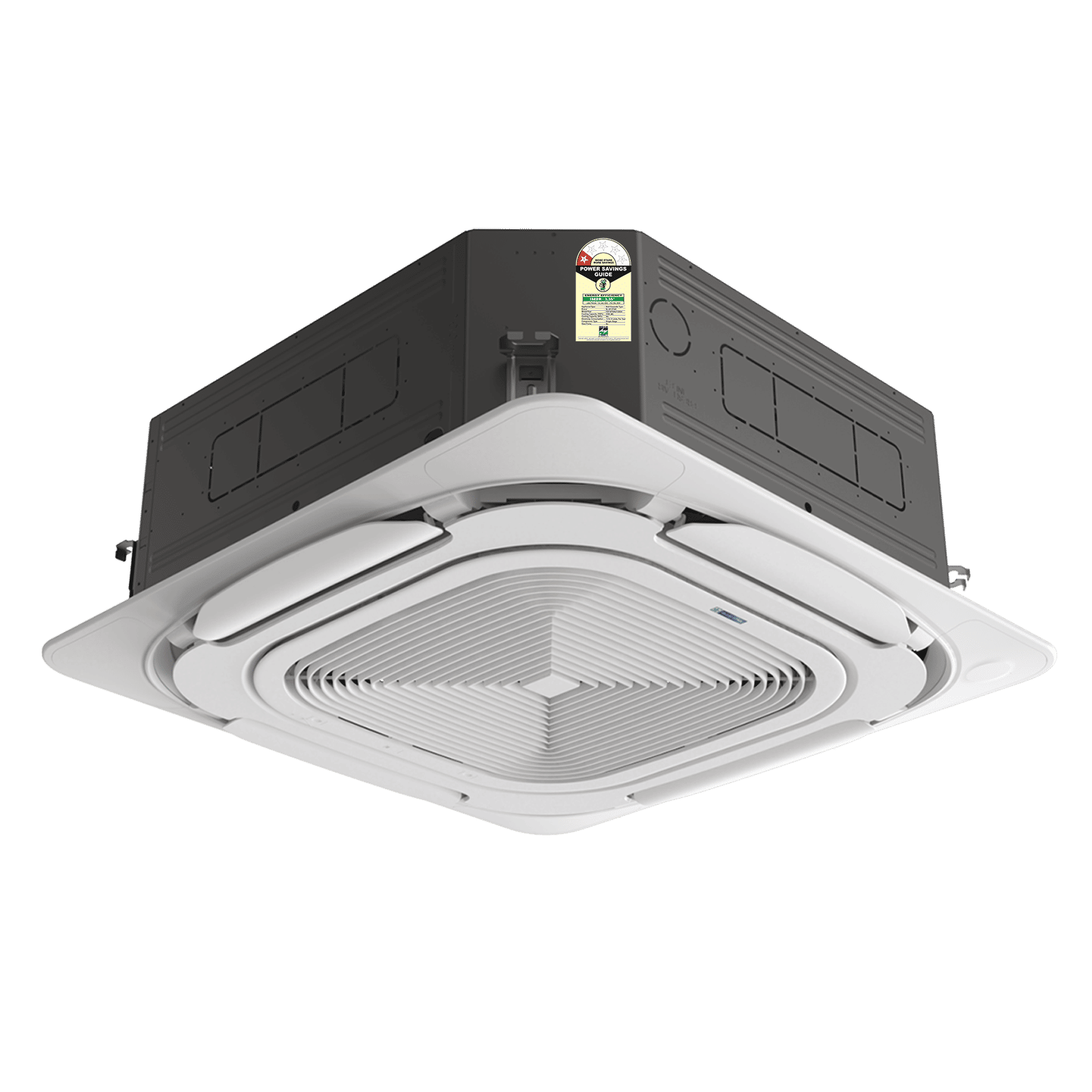
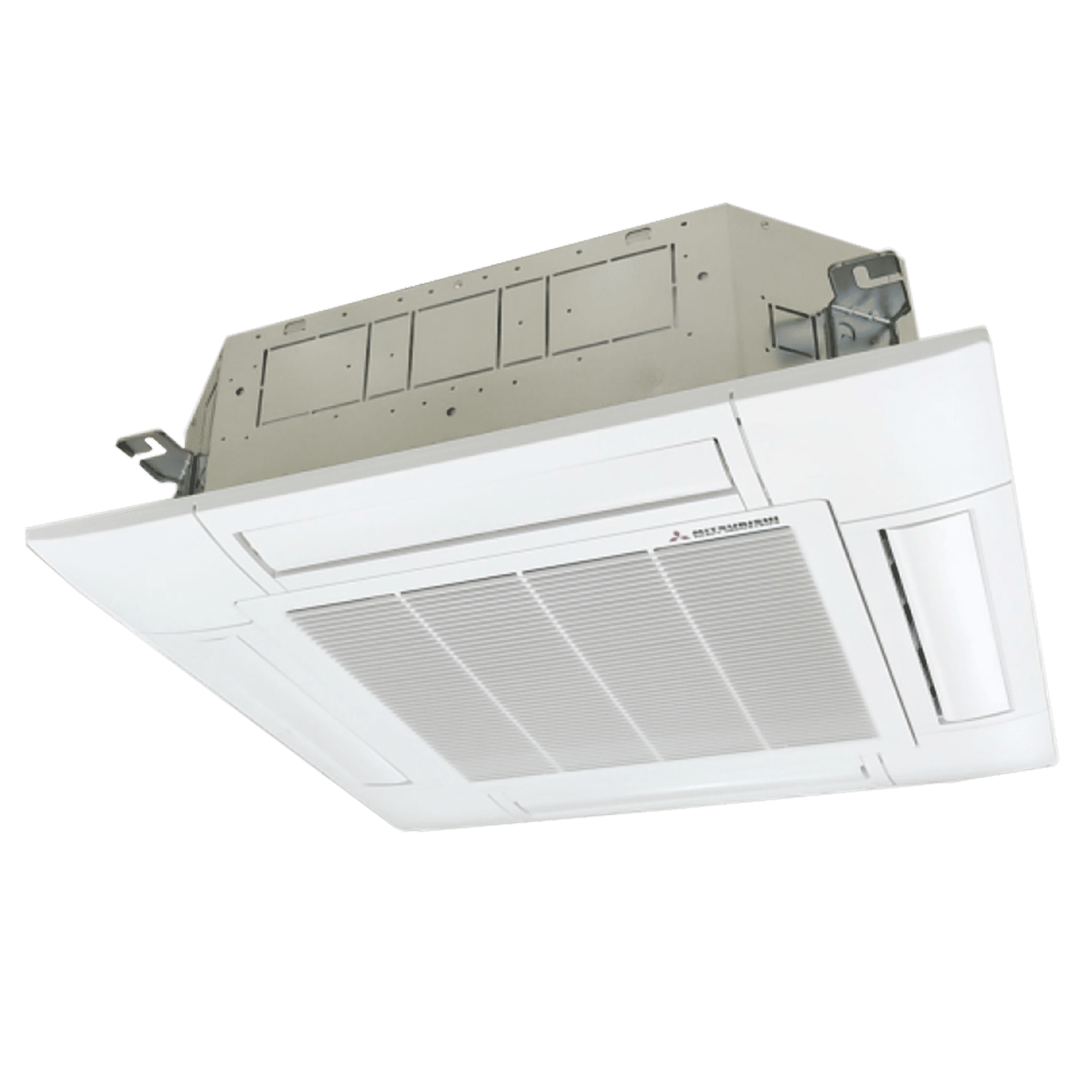
The installation of a cassette AC requires professional planning, and the following things need to be considered:
– False ceiling: The ceiling must have sufficient depth to house the indoor unit
– Proper drainage: The condensate water needs a drainage line routed above the ceiling
– Structural support: The indoor unit must be suspended using mounting brackets and rods for structural integrity
– Outdoor unit: Like split ACs, the outdoor compressor unit must be placed in an area with adequate ventilation
– Electrical load: For the installation of a higher tonnage cassette AC, proper electrical provisioning is critical
Before purchasing a cassette AC for residential use, consider room size and ceiling height, false ceiling, maintenance access, and tonnage requirements. While they aren’t the most energy-efficient, they consume similar power to that of a traditional split AC.
A cassette AC is not just about cooling; it is a machine that distributes cool air intelligently with a design that eschews your eye. They are the preferred cooling solution for modern offices and retail outlets where aesthetics matter as much as efficiency. For example, one 3-ton cassette AC can replace two 1.5-ton split units, and is worth considering for those seeking a discreet and uniform cooling for a large living room with a false ceiling.

Unleash your inner geek with Croma Unboxed
Subscribe now to stay ahead with the latest articles and updates
You are almost there
Enter your details to subscribe

Happiness unboxed!
Thank you for subscribing to our blog.
Disclaimer: This post as well as the layout and design on this website are protected under Indian intellectual property laws, including the Copyright Act, 1957 and the Trade Marks Act, 1999 and is the property of Infiniti Retail Limited (Croma). Using, copying (in full or in part), adapting or altering this post or any other material from Croma’s website is expressly prohibited without prior written permission from Croma. For permission to use the content on the Croma’s website, please connect on contactunboxed@croma.com
- Related articles
- Popular articles
Karthekayan Iyer
Comments