







Split AC vs window AC power consumption is one of the most common comparisons people make when shopping for a new air conditioner. Air conditioners are among the most power-hungry appliances in a home, and the type you choose can have a real impact on monthly costs. Split ACs are generally seen as the more efficient, modern choice, while window ACs continue to appeal for their simpler design and lower upfront price.
So, which one actually uses less electricity in regular use? So, in this guide, we’ll break down split AC vs window AC power consumption to help you decide which option makes more sense for your needs.
Window AC vs Split AC Power Consumption: Which Uses Less Electricity?
When comparing split AC vs window AC power consumption, the difference comes down to how it handles cooling over long periods of use. Both types can cool a room effectively, but their design and compressor operation lead to different electricity usage patterns, which matter because air conditioners are among the most power-hungry appliances in a home. Over time, those differences can have a direct impact on electricity bills.
Window air conditioners use a single-unit design that houses the compressor, condenser, and evaporator together. Most models rely on fixed-speed, non-inverter compressors that run at full capacity until the set temperature is reached, then shut off completely. When the room warms up again, the compressor restarts at full power. This frequent start-stop cycle tends to increase electricity consumption during longer usage periods.
ALSO READ: Does Sleep Mode in air conditioners save electricity? Functions explained
On the other hand, split air conditioners use separate indoor and outdoor units, which allows for better heat dissipation and more controlled cooling. Non-inverter split ACs can consume power similar to, or slightly higher than, window ACs with the same efficiency rating. Inverter split ACs operate differently.
Instead of switching fully on and off, the compressor adjusts its speed based on cooling demand. Once the desired temperature is reached, it continues running at a lower power level, which reduces electricity consumption and avoids the repeated energy spikes seen in fixed-speed systems.
You can work out the electricity usage using a simple formula: Power Consumption (kW) × Usage Hours per Day × Days per Month × Electricity Rate (per kWh)

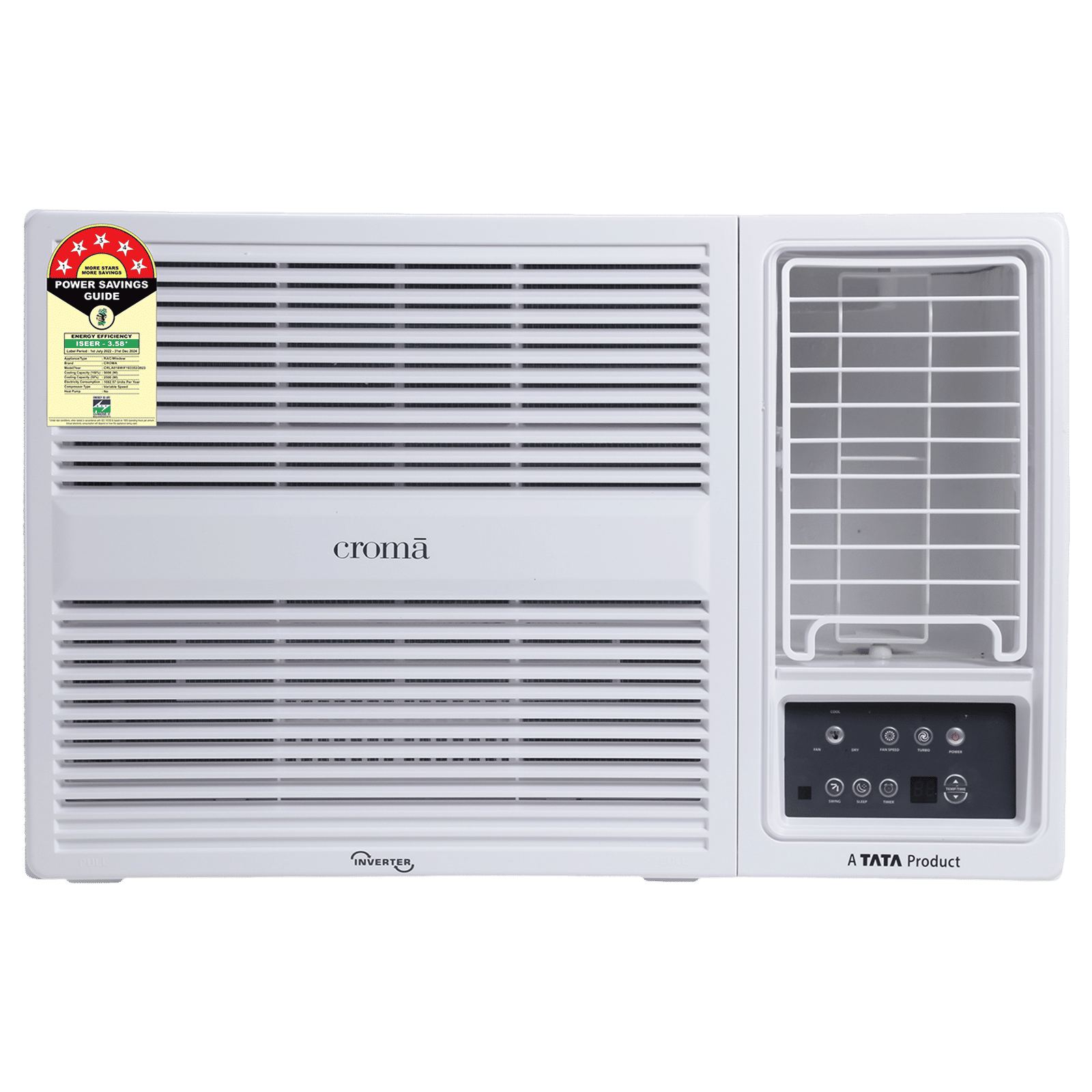
For instance, at Rs. 7 per kWh and about 8 hours of daily use, a 1.5-ton 3-star window AC that draws around 1.4 kW would cost roughly Rs.2,352 a month to run. Under the same conditions, a 5-star inverter split AC using about 1.0 kW would come in closer to Rs. 1,680 per month, saving roughly Rs. 672.
Over a month of regular use, that difference makes it clear why split ACs, particularly inverter models, generally consume less electricity.

Unleash your inner geek with Croma Unboxed
Subscribe now to stay ahead with the latest articles and updates
You are almost there
Enter your details to subscribe

Happiness unboxed!
Thank you for subscribing to our blog.
Disclaimer: This post as well as the layout and design on this website are protected under Indian intellectual property laws, including the Copyright Act, 1957 and the Trade Marks Act, 1999 and is the property of Infiniti Retail Limited (Croma). Using, copying (in full or in part), adapting or altering this post or any other material from Croma’s website is expressly prohibited without prior written permission from Croma. For permission to use the content on the Croma’s website, please connect on contactunboxed@croma.com
- Related articles
- Popular articles
Shubhendu Vatsa
Comments